Category Archives: Nature

Solidago

Solidago

Oh goldenrod, turned brown, your burling
seedheads, stalks withered.

Yet you stand upright beside
this morning’s damp ledge-stone.

I carried cans of water to your feet
all through the hot, bone-dry summer.

You rocked in the searing breeze,
bending toward the sun even so.

I’ve admired your late-summer blooms,
where the bees rubbed their yellow-coated legs.

Yesterday some hopeful rain finally splashed
down and soaked into the dusty ground.

Are your roots reaching outward
to extend your footprint for next year’s glory?

Illumination

I am the magnificent moon
a fertile daughter
on the barren surface
dark eyes pleading
lips full and round,
effulgent.

When I am full—
I speak.

Don’t you see it? Do you see?

Everything is precious.
Time now for
the fiercest protection
imaginable.

You gaze upwards . . .
my lips are moving
my eyes pleading.

You blink.
Shake
your head.

Wonder,
am I mad
under the moon?

No. The sacred
daughter of the moon
speaks to the summer
daughter standing barefoot
in damp grass having left
her shoes inside.

I am the magnificent moon daughter
circling the Great Mother, casting
light in the rounds of days.
Starlit and sparkling
floating
on black velvet.

My lips move.

Don’t you see it?
Look!

Daughters, we
are unbreakable.

Pregnant with possibility.
Fierce in our fullness.

Flood

I am endless rain,
drowning dew,
a green-spored parasol
in tea-black soil.
I am a puddle on the surface
of grey-rock ledge
the slippery sheen of slate stone.
I’m coal black, wet
tree trunks with their patches
of vibrant, soft moss.
I’m the bass notes of green frogs,
the whir of toad songs,
night bugs mating on 
a screen door 
in porch light.
Ping-pong balls 
on a tin roof.

My city is gone.

I am soaking rain,
humidity my perfume,
curling hair frizz and
damp-showered skin.
I’m a shirt that sticks 
to slick backs.
Insistent like a deep-
tongued kiss. Languid, 
then lashing.

My city is gone.

I am a waterfall of rain,
a driving deluge, my
thunderous roar carving
new river banks and felling
shallow-footed tall white pines.
I keep midnight company,
create caverns out of concrete,
carry the refuse of humanity
from empty doorsteps.
I pour into their bottomless
secret places leaving
dark, murky, stinking pools. 

My city is gone.

I am a warning rain—
I am tree-trunk tangles on
railroad trestles,
a deep crevasse where you
used to drive home.
I carry mountains to
the other side of roads, 
twist bridges, spin cars
in river eddies.
I embrace the grit, 
scour it clean.

I feed on warmth,
build higher and higher into
ever-thicker clouds
heavy, full, and ready
to utterly saturate earth’s
dry, thirsty deserts or
already-soaked spongy 
woodlands.

I mist
       sprinkle 
                 pour
      drum
             pound.

I never mourn—
not cities, not roads, not homes . . .
mud to the ankles,
precious memorabilia,
delayed plans,
lost dreams.


July 10, 2023, Vermont

Dropping into the Autumnal Equinox

Rain drops drip, drip, splash, plummet earthward soaking into a rotten hollow log covered with lichen and mushrooms. The huge log is quietly decaying on the forest floor. No one notices. The carpenter ants have long since lost interest. Its hollows are too moist, now, for cozy dens for gray foxes or chipmunks. On its north side, a plush covering of luxurious green moss. It’s impossible not to reach out and run the palm of my hand over it, my fingers tickling the softest, greenest gift that nature has to offer me on this dark, rainy equinox morning.

Goodbye Night Sky

It’s nice that some folks will be able to be better connected to the Internet with Starlink around the globe. And what I am about to say is NOT meant to inspire guilt for using Starlink, but more to raise important existential questions. I am quite concerned about the number of satellites Elon Musk’s company, SpaceX, and other companies, including Amazon, will eventually be launching into low Earth orbit (LEO). Currently, according to an article in Science, and another article from CNBC, SpaceX has about 2,000 satellites in orbit, with FCC approval already for another 12,000. SpaceX has plans for a great many more satellites than that. There are predictions that eventually we could have 100,000 satellites in LEO. Hello, space junk!

Already, monetizing LEO is affecting the field of astronomy in significant ways. Astronomy is a key discipline for humans to sort out the mysteries of the universe and our place in it. SpaceX has put visors on subsequent satellites after the first outcry from both night sky viewers and astronomers. The visors help some, to the naked eye, but not perfectly. But they do not solve the interference in astronomy work. Other companies may not care about whether their satellites can be seen or not. As I’ve read, there is no global blueprint for fielding this issue.

Already I am noticing, shortly after evening falls, more wobbly, zigzagging satellites crossing my view of the stars. Sadly, much of humanity lives in so much light pollution now, they can’t see the stars. But for those of us that can, stargazing is an age-old human pastime that is important, I believe, for well-being. Seeing the Milky Way, constellations, shooting stars, and sometimes even the aurora borealis reminds us of the vastness of the universe, and keeps alive wonder and appreciation of beauty. The night sky reminds us that we don’t have all the answers for understanding how things work. In fact, on a grand scale, as Einstein liked to remind us, we know very little. Lastly, what of migratory species that navigate by stars? Do we know what interference this may have?

All of this begs the question: Who owns space? Doesn’t it “belong” to all living creatures on Earth? Do we have a right not to have the night sky obliterated by LEO objects? Really, if you get right down to it, space belongs to no one. Yet, there are also plans, in this revived space race, to sell off parts of the moon to the highest bidders for mining and other plunder.

We have so many difficult issues down here on the planet Earth, and we are floundering at solving them. Meanwhile, as this larger space issue is manifesting in the background, I fear no one is paying attention. If we can’t solve complex issues here—gun violence, climate change, starvation, war—how will we ever come to agreement on these questions about space, and saving our night sky?
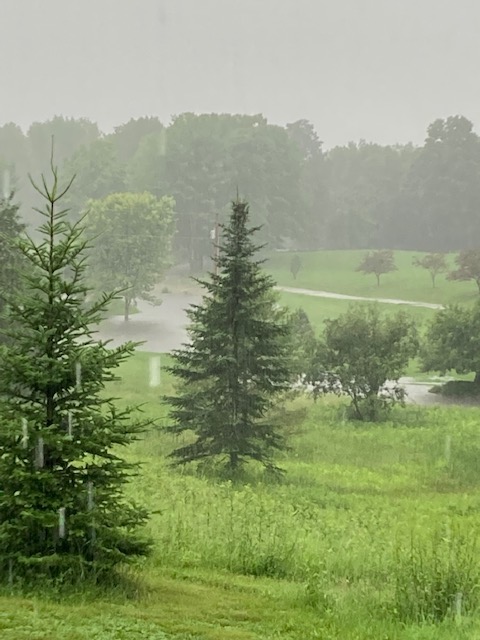
Photo by Cliford Mervil on Pexels.com

On Wisdom

Was listening to a really interesting podcast—a conversation with Iain McGilchrist, author of the The Master and His Emissary: The Divided Brain and the Making of the Western World. In the program he quotes Yeats: “The best lack all conviction, while the worst are full of passionate intensity” (William Butler Yeats, “The Second Coming”).

To me, this reminds us of the importance of maintaining an open mind and a humbleness when it comes to our understanding of ourselves, each other, nature, the world, and the universe. This quote speaks to Socrates’ belief, one that Albert Einstein shared, that the wisest people admit and understand that they really know next to nothing.

Wise people can see and accept—without feeling inferior or stupid, but rather joyfully curious—that the world, any issue or problem, any person or group of people, and the vastness of nature hold great complexities, most of which lie far beyond our singular understanding.

When we think we know how a thing IS, or how a thing SHOULD be, we stop learning. We are then only espousing our own limited knowledge. Our understanding thus falls far short. We don’t listen. We don’t make good choices.

And, as we are seeing in a very painful way right now in the U.S. and other places around the globe—communication and problem-solving fall apart completely, rendering us inept and powerless. Undesired and negative ramifications usually unfold exponentially as a result of certainty and righteousness.

Survival

From an intriguing book I just picked up: Behaving As If the God in All Life Mattered, by Machaelle Small Wright, 1983 (1997):

Overlighting Deva: “By survival, we mean the act of maintaining the fusion and balance between spirit and matter on the physical planet Earth…. The very physical existence of [humans] on Earth has depended upon all kingdoms of nature…. [The dynamic] must shift from being one of distant benevolence, as it has been in the best of past times, to being one of conscious co-creativity…. Humans do not, on the whole, understand the dynamic relationships between spirit and matter. Nature does. It is a dynamic that is inherent within the life force of nature….

But in order for the dynamic to be fully useful to all the other levels of reality within this universe, [this dynamic] must be unlocked from its custodianship within nature and linked with the human tool of intelligence. Only then can it be applied in principle within all realms of life.

If humans continue in their reluctance to join [nature] … then surely out of human ignorance and arrogance, we will all continue to experience difficult challenges to our survival and, eventually, we will be faced with the full separation of spirit from matter on this planet” (xvi–xvii).

Wright says, “ The nature intelligence I speak of contains within it the truth—a truth that has been present and available to us since the beginning of time. It is not available exclusively to the gifted. It is a vast universal truth that is present around us everywhere. Our doorway to this truth is through nature itself” (xiv).